
Mindful Connections: Best Psychology Books on Parenting, Family Dynamics, and Relationships

Relationships shape identity. Family, childhood, romantic connections, these are the places where people learn how to give and receive love, how to set boundaries, and how to handle conflict. But when those lessons come wrapped in trauma, silence, or survival, they don’t always serve future relationships. That’s where the best psychology books on relationships come in. They don’t fix the past. But they help make sense of it. Especially for readers navigating parenting and family dynamics, or trying to understand how early patterns show up in adult life. Why Stories Like 480 Codorus Street Matter Books grounded in lived experience, especially ones that confront trauma head-on, have the power to shift perspective. Sandra L. Kearse-Stockton’s 480 Codorus Street trilogy is one such body of work. It doesn’t flinch from pain. It doesn’t sanitize hardship. It offers a real and emotionally raw journey through abandonment, perseverance, and the kind of inner strength that can only be earned. For readers dealing with emotional inheritance, generational cycles, or the impact of childhood instability, stories like this don’t just resonate, they reflect what they’ve lived through. And sometimes, that validation is what opens the door to deeper healing. Paired with strong psychology books, memoirs like 480 Codorus Street can become part of a reader’s emotional toolkit. When Parenting Is Triggering, Not Just Tiring A lot of parenting books talk about behavior management. Fewer talk about what happens when parenting brings up memories of what someone didn’t get as a child. That’s where emotionally intelligent …

Relationships shape identity. Family, childhood, romantic connections, these are the places where people learn how to give and receive love, how to set boundaries, and how to handle conflict. But when those lessons come wrapped in trauma, silence, or survival, they don’t always serve future relationships. That’s where the best psychology books on relationships come in.

They don’t fix the past. But they help make sense of it. Especially for readers navigating parenting and family dynamics, or trying to understand how early patterns show up in adult life.

Why Stories Like 480 Codorus Street Matter

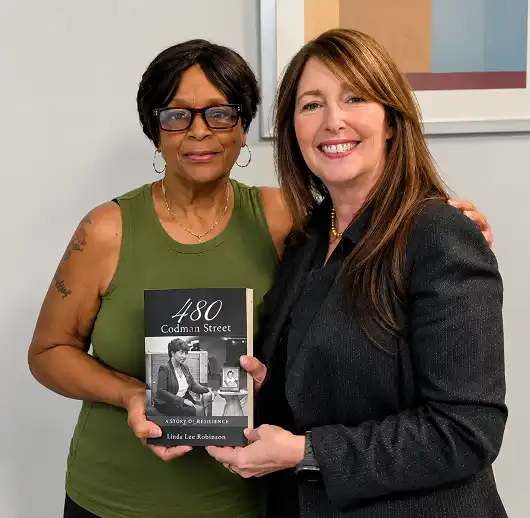
Books grounded in lived experience, especially ones that confront trauma head-on, have the power to shift perspective. Sandra L. Kearse-Stockton’s 480 Codorus Street trilogy is one such body of work. It doesn’t flinch from pain. It doesn’t sanitize hardship. It offers a real and emotionally raw journey through abandonment, perseverance, and the kind of inner strength that can only be earned.

For readers dealing with emotional inheritance, generational cycles, or the impact of childhood instability, stories like this don’t just resonate, they reflect what they’ve lived through. And sometimes, that validation is what opens the door to deeper healing.

Paired with strong psychology books, memoirs like 480 Codorus Street can become part of a reader’s emotional toolkit.

When Parenting Is Triggering, Not Just Tiring

A lot of parenting books talk about behavior management. Fewer talk about what happens when parenting brings up memories of what someone didn’t get as a child. That’s where emotionally intelligent books, written with psychological grounding, offer something different.

They help readers recognize when they’re reacting from an old wound rather than the present moment. They guide them toward self-awareness instead of shame. For anyone who grew up without stability, safety, or affirmation, learning how to give that to their own children can feel unfamiliar and overwhelming.

This is where strong resources on parenting and family dynamics become more than helpful; they become necessary. They provide structure, language, and encouragement for the kind of parenting that breaks cycles, not repeats them.

Why Psychology Books Still Matter

It’s easy to dismiss self-help or psychology books as repetitive or overly simplified. But the right ones don’t preach. They hold up a mirror. They help readers track their emotional patterns, identify core beliefs, and make more conscious choices in relationships.

The best psychology books on relationships aren’t about fixing people. They’re about showing people how to work with their own truth. They explore trust, communication, trauma responses, codependency, and emotional regulation in a way that feels grounded, not clinical.

When paired with memoirs like Sandra’s, the experience deepens. One shows how pain shaped a life. The other offers tools for what to do with that pain.

Conclusion: Healing Isn’t Linear, But it’s Possible

There’s no single book that will unravel a lifetime of hurt. But there are pages that can start the process. Whether someone is trying to parent differently, love with more clarity, or finally step out of old family patterns, the journey often begins with insight.

The best psychology books on relationships do more than inform. They create space. They hold emotion. They challenge assumptions. And when backed by stories like Sandra L. Kearse-Stockton’s 480 Codorus Street, they remind readers that resilience isn’t just a concept. It’s a choice made daily.

And every reader deserves to see that it’s possible.

Sign up for free class

It’s easy and free!

Related Posts

Books for domestic violence
November 26, 2026
Why Reading Stories of Survival Can Help Women Reclaim Their Confidence

After abuse, the hardest thing to rebuild is often not a home or a routine. It is the quiet belief that your own judgment can be trusted. Many women leave painful relationships carrying shame, self-doubt, and a voice in their head that never belonged to them. Talking helps, but not everyone is ready to talk. That is where stories come in. Reading about women who faced the same fear and came through it can make recovery feel possible. Books for domestic violence give survivors language for what happened and proof that healing is real. The Best relationship books for men can also help partners, sons, and brothers understand what support actually looks like. This post explores how survival stories help women reclaim their confidence. Why Confidence Breaks After Abuse Abuse rarely announces itself with one dramatic moment. It builds through small comments, controlled choices, and constant second-guessing. Over time, a woman learns to doubt her memory, her instincts, and her worth. Even after she leaves, that doubt follows her into work, friendships, and new relationships. Confidence is not lost because she is weak. It is worn down on purpose. Understanding that is the first step toward getting it back, and stories can help her see it clearly. What Survival Stories Offer That Advice Cannot Advice tells you what to do. A story shows you what it feels like to do it. When a survivor reads about a woman who packed a bag in secret, found her voice in a courtroom, …

best books about family relationships
November 3, 2026
Best Books About Family Relationships That Focus on Perseverance Through Life’s Challenges

A person’s family can have a lasting effect long after childhood. The lessons learned at home, the hardships endured, and the relationships that provide comfort or cause pain can affect how someone approaches adulthood. Some memories take years to work out. Others, they find a strength they didn’t know they had. The stories that explore these realities give readers an honest look at what it means to face adversity and keep going. Sandra L. Kearse-Stockton writes of these themes in memoirs based on her experiences with family, hardship, faith, and perseverance. Her 480 Codorus Street trilogy details her passage through hard times and the grit it took to keep on. Best books on family relationships: Her writing is more than a recollection of the past for readers seeking the best books on family relationships. It’s a story of how someone can have painful experiences, but not let them define an entire lifetime. Finding Strength in Difficult Family Experiences Family relationships are complicated. People’s experiences as children may affect their later understanding of trust, conflict, and relationships. In her first book of the trilogy, 480 Codorus Street: Surviving Unpredictability, Sandra dives into these realities. Growing up in York, Pennsylvania, one of seven siblings, she endured domestic violence and emotional hardship. In her memoir, she looks back at those early years and how they impacted her life. She also tackles the difficult issue of forgiving an abusive parent. Sandra is not claiming that painful experiences are easy to get over. Instead, she …

Books on family conflict resolution
October 9, 2026
Why Sandra L. Kearse-Stockton’s Stories Resonate with Readers Exploring Family Relationships

Family stories matter because they don’t usually stay within a single generation. What happens in childhood can affect how people define trust, hardship, responsibility, and hope years later. The most moving stories are those that don’t fake the simplicity of family life. They recognize difficult experiences but leave space for strength, faith, and change. That is what makes the writing of Sandra L. Kearse-Stockton resonate with readers. Her books are based on real experiences of struggle, resilience, and success. She writes with the conviction that storytelling can heal, uplift, and transform lives, inviting readers to reflect on their own experiences as they go. She Tells Family Stories with Honesty Sandra’s writing is personal. Born in York, Pennsylvania, she grew up as one of seven siblings and later became an author, mother, foster parent, and veteran. Her life experiences give her a direct understanding of how family, adversity, and resilience can become intertwined. Her 480 Codorus Street trilogy is particularly important to that story. The memoirs chronicle her journey through trauma, resilience, and hope, giving readers a candid account of experiences that helped shape her life. The website describes the trilogy as a journey of survival and strength, and that is the heart of her work. Honesty is important for readers seeking Books about family bonds. Sandra does not portray family relationships as perfect or uncomplicated. She narrates experiences that illustrate how family, childhood, adversity, and personal strength can be so interwoven. Her Books Leave Room for Reflection A good family …

Books on family conflict resolution
October 7, 2026
When Good Intentions Create Family Conflict: Understanding What Happens Beneath the Conversation

Family conflict rarely starts with a slammed door or a raised voice. More often it starts small, with a comment made out of love, a piece of advice nobody asked for, or a concern that's been sitting in someone's chest for months before it finally comes out sideways. A mother wants to keep her daughter safe. A husband thinks he's being helpful. An older sibling brings up something from years ago because they genuinely believe it might spare everyone another hard night. None of that is malicious. And yet somehow the person on the receiving end walks away feeling small, or unheard, or like they're being managed rather than loved. That disconnect, between what we meant and what actually landed, is where most family arguments really begin. Pull back the layers of almost any blowup, and you'll usually find something quieter underneath: an old wound, an unmet expectation, a sensitivity nobody bothered to name out loud. Why Good Intentions Still Backfire There's something almost reflexive about advising people we love. We see them struggling and our brain jumps straight to fixing it. The trouble is that fixing isn't always what's being asked for. A parent starts listing out what their kid should do differently, when honestly the kid just wanted five minutes of somebody listening without an agenda. A spouse reaches for logic and explanation in a moment that called for a hug and an "I hear you." A sibling brings up a topic that used to be neutral, not …

fiction books about family dynamics
August 5, 2026
How Sandra L. Kearse-Stockton Brings Family Experiences to Life Through Storytelling That Feels Deeply Personal

Family stories stick because they touch on something universal. Most everyone has memories that started at home. Some are comforting, others difficult to revisit. These early experiences affect how people see love, conflict, loyalty, trust, and resilience. Readers rarely look for books about families simply to follow a plot. They read them to recognize something familiar, to understand something unresolved, or to see how another person found a way through hardship. That search often leads them to fiction books about family dynamics that treat these experiences with honesty rather than sentiment. Sandra L. Kearse-Stockton writes from that place of honesty. Her stories are based on childhood experiences, family relationships, endurance, and personal reflection. There is no attempt to gloss over painful moments or make life easier than it really is. Rather, she keeps hope alive even in the face of hardship, and reminds us that resilience doesn’t have to be loud. More often, it is built quietly, one day at a time. She Understands That Family Stories Are Never Simple Families are complicated by nature. Love and disappointment can exist together. Protection and pain sometimes come from the same place. Those contradictions are uncomfortable, yet they are also real. Sandra L. Kearse-Stockton never seems interested in avoiding that reality. Her 480 Codorus Street series explores family life with an honesty that feels earned rather than constructed. Childhood is presented as the beginning of an emotional journey, not a neatly contained chapter that ends once adulthood begins. The experiences within those …

Parenting and family dynamics
June 30, 2026
What to Read Before Buying a Book: Reviews, Themes, and the Details Most People Miss

The quiet decision behind every good book choice Choosing a book is rarely as casual as it looks. Most people scroll, pause, click, and hope it works out. But the books that actually stay with us usually come from a bit more attention upfront. When the subject touches Parenting and family dynamics, that choice becomes even more personal because you are not just picking a story; you are stepping into someone else’s version of relationships, tension, care, and memory. The goal is not to overthink it, just to notice what feels aligned before you commit your time. Reading reviews the way experienced readers actually do it Reviews are useful, but only if you read them like a person, not a number. Star ratings are easy to scan, but they rarely tell you why a book landed the way it did. The real value sits in the language people use when they describe their experience. When a book shows up among famous books about family, the interesting part is not whether people liked it, but what moments stayed with them, what felt real, and what felt flat. That is where you start to understand whether the book will match your own expectations or simply pass through. Themes that quietly decide whether a book works for you Every book has a theme, even the ones that pretend not to. You can usually feel it within a few pages if you are paying attention. For readers drawn to Parenting and family dynamics, themes …

Leave a Reply

Your email address will not be published. Required fields are marked *